


The best way to keep your motorhome or caravan’s water tank clean.
2 January, 2018 | Update: 02/12/2025
A clean water tank is essential for anyone travelling with a motorhome or caravan. Standing water can quickly lead to bacteria, algae and unpleasant smells. Fortunately, with a few simple steps you can keep the tank and pipes fresh and hygienic. In this article, we explain why cleaning is important, how to do it step by step, and how to keep your water clean throughout your holiday.
Contents
- Summary
- Why clean the water tank?
- What do you need?
- Cleaning the fresh water tank: step by step
- Cleaning the grey water tank
- Clean water on the road
- Can you drink the water in the tank?
- Frequently asked questions
Summary
- Clean the tank at least twice a year.
- Use tank cleaner, citric acid or a mild chlorine solution (with caution).
- Always rinse thoroughly afterwards.
- Refresh the water regularly while travelling.
Why clean the water tank?
Water in a motorhome or caravan often stands still for long periods. This can lead to the formation of biofilm: a thin, slippery layer in which bacteria multiply quickly. This can cause musty odours, strange tastes or blockages. Even if you don’t drink the water, you can still come into contact with these bacteria — for example while showering, rinsing fruit and vegetables or through the mist of running water. It does not automatically mean you will get sick, but the risk is there, especially for people with a reduced immune system. Regular cleaning ensures that the entire water system remains hygienic and reliable.
Tip: Clean the tank thoroughly at least twice a year: before the camping season and after winter storage. In warm weather or with heavy use, more frequent cleaning is recommended.
What do you need?
- A place where you can safely drain water
- A suitable tank cleaner or citric acid
- A clean filling hose
- A funnel or a bucket
- A hose brush for the tank opening (optional)
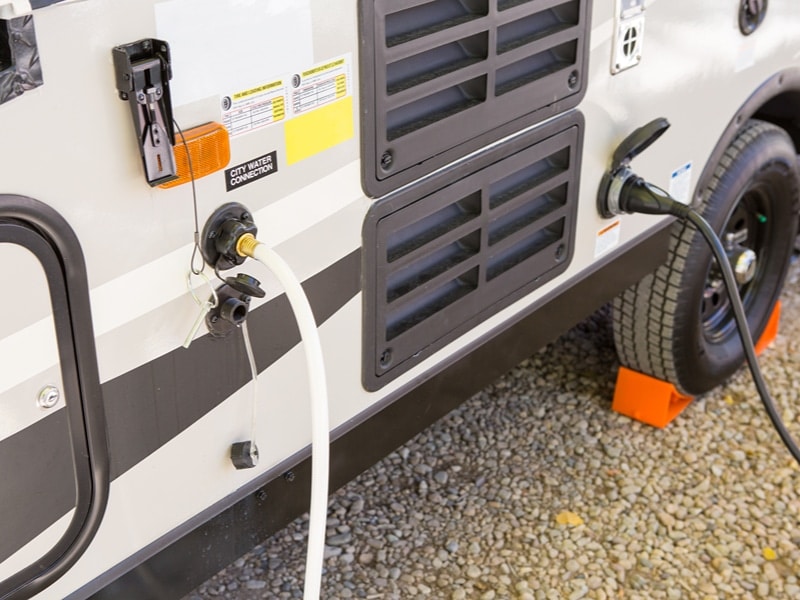
Cleaning the fresh water tank: step by step
1. Drain everything
Drain the fresh water tank, pipes and boiler. Open all taps so that the water can run out completely.
2. Fill the tank with a cleaning solution
Choose one of the following options:
- Special tank cleaner: safe for pipes, rubber parts and the boiler. Follow the dosage on the packaging.
- Citric acid: effective against limescale and light contamination (100–200 grams per 10 litres of water).
- Chlorine solution: works well against bacteria, but is not suitable for aluminium boilers. Use a maximum of 2–3 ml unscented bleach per litre of water.
Fill the tank completely and open the taps briefly so the solution also flows through the pipes.
3. Let the solution work
Let the cleaner work for 6 to 12 hours. Overnight is perfect.
4. Rinse thoroughly
Drain the tank and refill with clean water. Open all taps until the water runs clear and odourless. Repeat if necessary.
5. Don’t forget the boiler
Open the hot-water taps until no warm water comes out anymore. This ensures the boiler water has also been replaced.
Cleaning the grey water tank
A grey water tank can produce unpleasant smells. Therefore, it’s important to clean it properly. Empty the tank regularly at a designated grey water disposal point. After cleaning the fresh water tank, allow the used cleaning water to run through to the grey water tank. Fill the tank with warm soapy water, drive a short distance to let the water slosh around, then empty it. Rinse afterwards with clean water.
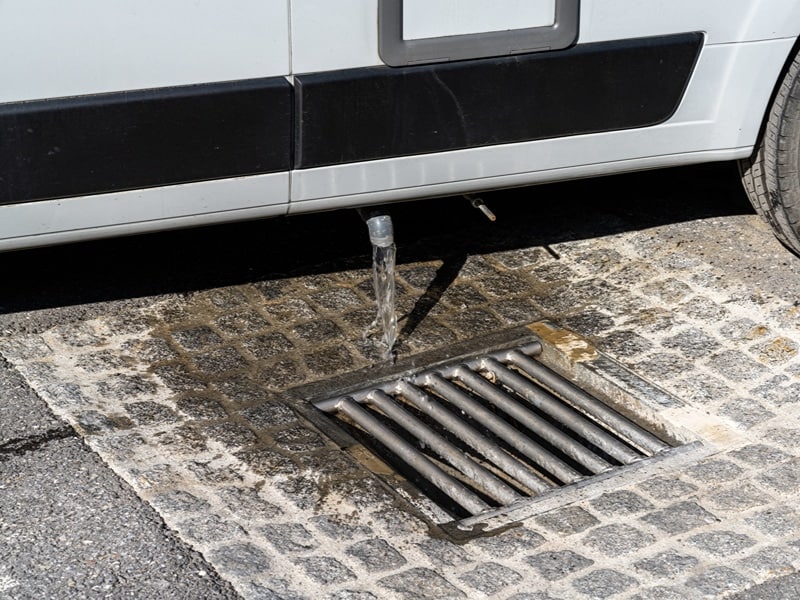
Clean water on the road
Refresh regularly
Refresh the water every three to four days, especially in warm conditions.
Use a clean filling hose
A shared or dirty hose on a campsite can easily cause contamination. Always use your own clean hose.
Keep the tank closed
Prevent sunlight from entering the tank or hoses — this helps prevent algae growth.
Use filters
A carbon filter improves taste and smell. If you use a microfilter, replace it in time.
Can you drink the water in the tank?
Yes, provided the tank is well maintained and you are sure the water is clean. If in doubt, use tank water only for washing or showering and bring bottled water for drinking.

Frequently asked questions
How often should I clean the water tank?
Clean the tank at least twice a year: at the start of the camping season and after winter storage. In warm weather or with heavy use, more frequent cleaning is recommended.
Which products can I use?
A special tank cleaner works best and is safe for pipes and the boiler. Citric acid is a good alternative for limescale and light contamination. Only use chlorine in low doses and never in aluminium boilers.
Is the water in the tank safe to drink?
Yes, if the tank is properly maintained and the water is clean. If unsure, use it only for washing or showering.
How do I prevent bad smells in the tank?
Refresh the water regularly, use a clean hose, keep the tank closed and clean it in time.
What should I do if the water smells musty or looks cloudy?
Drain the tank and clean it thoroughly with tank cleaner or citric acid. Rinse the pipes until the water is clear and odourless. If the smell persists, repeat the cleaning.
How do I clean the pipes?
Let the cleaning solution run through all taps. After the soaking time, rinse thoroughly until the smell disappears.
How long does water stay good in the tank?
In warm conditions, water usually stays good for only a few days. Refresh it every three to four days.




26 Comments
I have a small touring caravan and my tank is a 50 litre rolling barrel which I fill at the drinking water tap on the site. There is no internal tank. How am I supposed to scrub that out? The access holes are about 6cm across so too small to access with a hand All I can hope to do is use the steradent tablets in the rinsed out tank with some clean water and then pump it through to the pipes and later rinse. Any one got a better idea?
We use Puriclean to sterilise the tank and pipes then add Aquasol to each tank of water. Also use a separate container for drinking water which we fill from onsite drinking water taps.
Thanks For Sharing this Blog!!
Interesting article but our problem is that we filled our take with a non potable hose and didn’t realise. We couldn’t understand why the water tasted bad.
Once we realised the cause we’ve flushed and flushed out the tank but can’t get rid of the last taint.
Any suggestions. The list of contaminants from a non potable hose is horrendous.
I would exercise caution following the use of an Ozone generator in a caravan or motorhome, in my experience as a water engineer my main issue was always with pipe cleanliness, especially the issues already pointed out by some well informed readers on this thread.
We have always drank water from out Motorhome onboard tank for the last 25 years. However I have always fitted a filtration system.
For many years I used the Nature-Pure filter system but due to the increasing costs of replacement canisters I have changed to the 3 M HF10 filter which gives similar protection.
Simply use either pure lemon juice or vinegar (I prefer lemon juice as no residual taste) you simply need an acid to rid yourself of alkaline (build up in the tank & pipes)
1. Good dose of lemon juice depending on size of tank.
2. Flush through the system thoroughly.
3. Refill with clean water.
Simple
I read about the use of Milton and bleach and the problems it can cause. The manufacturers of our boiler recommend using citric acid which is tasteless and does not cause any problems with the boiler. This can be bought in powder form from Amazon. I will be using this to clean our water tanks as it is inexpensive and safe.
Complete and utter rubbish. You are actually encouraging people to buy bottled water which may have been shipped half way across Europe at a huge cost to the environment. People may even be camping in the mountains with fabulous local tap water and then buying bottles from another country! Ignore this rubbish and just clean out the system using Milton and refill regularly.
We have spent three years caravaning in Australia, Milton was used on a regular basis to keep pipes and tank sweet, yes there is sometimes a taste of Milton but we were safe. In a country where water is more important than fuel, both were topped up at a start of a day’s travel . As a retired clean water employee, I would be more concerned with the source of the water, as it leaves a high pressure, animal infestations disintegrate at atmospheric pressure, so careful what you drink!
It is well known that the use of Miltons can seriously damage your water heater and other metals in the water system – so why not use the recommended products also vinegar can be a good aid. All the best George.
Yes. If you put a little Milton on to some stainless steel and leave it you will soon understand what it does to the inside of you stainless steel water heater. You won’t use it again when you have seen that.
Absolutely agree with Kevin, suggesting buying bottled water is so wrong for many different reasons.
Also, using these pages, which we campers believe to be about sharing help and advice, to advertise a product is very disappointing – shame on you ASCI!
Thanks very much, George T and others for info about Miltons. I was about to flush out my camper, it having stood sadly unused for a couple of months now, with Milton but will now look into vinegar or citric acid options. Thank you.
Is this an advert?
We emptied the water tank on our motorhome when we took it off the road for winter. We flushed it through with Puriclean 5weeks ago and went way in it for a rew days and it was fine. We filled it fresh from home before going away last weekend but the water was tainted. We flushed it through thrice but taste just the same. Any ideas on how to solve this problem would be much appreciated. Thank you.
Your most likely issue will be your hose pipe. Always use a food grade hose.
Your most likely issue will be your hose pipe. Always use a food grade hose to fill your tank.
Milton
Certainly looks and reads like an advert.
€399 for the only recommended ‘fix’ in the article.
I can’t fill my water tank
Great advice about water treatment
Thank you, Charles!
How do you clean the pipes before installing your gadget?
How to clean all the other parts of the system?
How is your ‘biofilm’ removed?
Rubbish article of no practical use!
What chemical should I put in my RV water tank to make the water safe ?
Hi Pat,
I would advise to inquire at a campsite shop.
Considerations in the selection process include whether the cleaning agent leaves a scent or not, whether it is an ecological cleaning agent and whether it also removes limescale.
Kind regards,
Marieke
Am fairly new to motorhoming and I am keen to pick up tips from experienced campers